Published · Updated · General guidance, not legal advice
The right time to cut depends on two things: the tree or hedge itself, and the birds that might be living in it. Getting the timing right keeps the plant healthy and keeps you on the right side of the law.
The nesting season
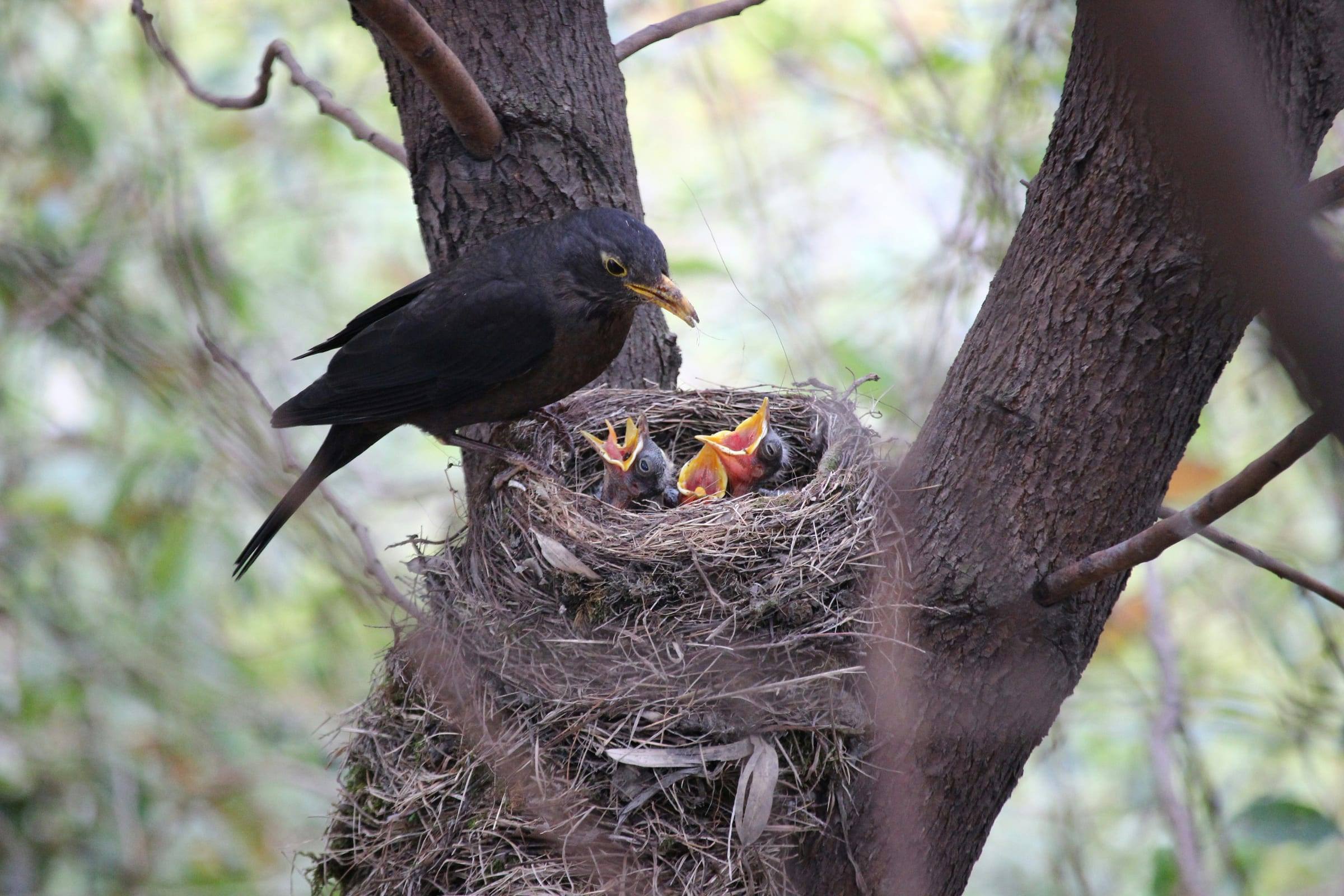
Most birds nest between March and August, with the busiest weeks in spring. Blackbirds, robins, wrens and dunnocks all nest in garden hedges and climbers, often lower down than people expect.
What the law says
In England and Wales, the Wildlife and Countryside Act 1981 makes it an offence to intentionally take, damage or destroy the nest of any wild bird while it is in use or being built. Scotland’s version of the Act goes further and also covers reckless damage and interfering with a nest. There is no ban on cutting in spring as such, but a hedge or tree with an active nest has to wait.
Most trees: late autumn to late winter
When the leaves are off, we can see the shape of the tree and the tree is dormant, so pruning stresses it less. It is also outside the nesting season. Most crown reductions, thinning and felling happen between November and February.
Trees that bleed sap
Birch, maple and walnut lose a lot of sap if they are cut in late winter and spring, so we prune them in late summer or early autumn instead. Cherries and plums are pruned in summer, which lowers the risk of a fungal disease called silver leaf.
Hedges: late summer, and winter if needed
Most hedges are best trimmed in late summer, once nesting is over, with a second cut in winter for fast growers. Overgrown deciduous hedges such as beech are best cut back hard in winter while they are dormant. Evergreens such as laurel recover best from a hard cut just before growth starts in spring, after a careful check for early nests.
When it can’t wait
A dangerous tree or a branch about to fall is made safe whenever it is needed. Even then, we check for nests and do only what is needed until the season is over.
Based on the Wildlife and Countryside Act 1981 (as it applies in England and Wales) and general horticultural guidance, read on 4 November 2026.